
Essential Vitamins for Kids by Age (1–3, 4–8, 9–12)
Watching your child grow is pure joy, but ensuring they get the right nutrients can feel overwhelming. As a parent, you want to fuel their energy, sharpen their focus, and build strong bones without guesswork. This guide breaks down essential vitamins for kids by age with clear RDAs from trusted sources like NIH and AAP. You’ll learn what matters most for toddlers (1-3), preschoolers (4-8), and tweens (9-12), plus food sources and when supplements help. Pediatrician-approved and parent-friendly.
Why Vitamins Matter for Kids’ Growth
Vitamins aren’t magic pills—they’re building blocks for healthy development. They support immunity, bone growth, brain function, and energy. Kids aged 1-12 have unique needs as they sprint through growth spurts. Deficiencies can cause fatigue, weak bones, or poor focus, while excess risks toxicity.
Real Parent Example: Sarah noticed her 5-year-old’s constant tiredness. A vitamin check revealed low D levels—simple sunlight and diet tweaks fixed it.
Balanced intake from food is ideal. Supplements fill gaps for picky eaters or limited diets. Always consult your pediatrician first.
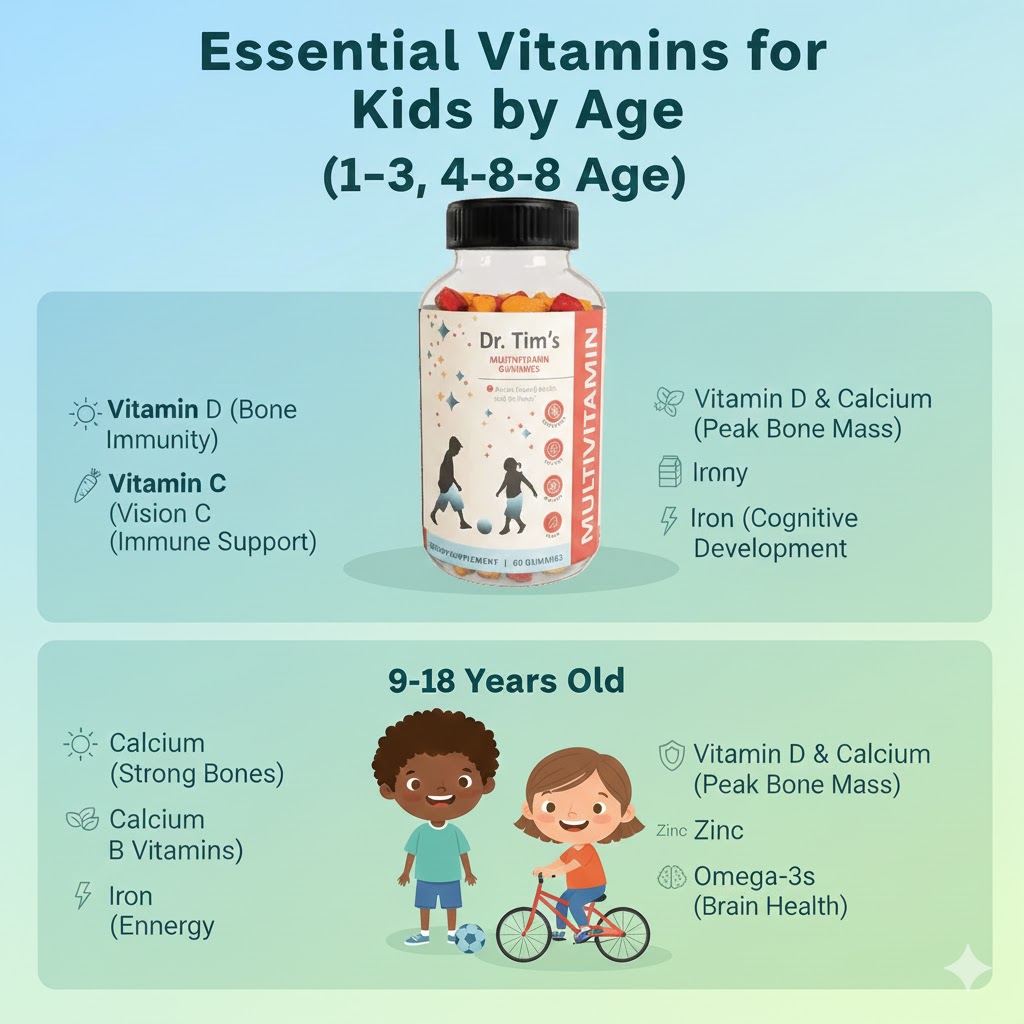
Age-Specific Vitamin Needs: 1-3 Years
Toddlers (1-3) are tiny explorers with rapid growth. They need vitamins for brain development and strong immunity. RDAs come from AAP and NIH guidelines.
- Vitamin A: 300 mcg daily for vision and skin health
- Vitamin C: 15 mg for immunity and iron absorption
- Vitamin D: 600 IU (15 mcg) for bone growth
- Vitamin E: 6 mg as antioxidant protection
- Vitamin K: 30 mcg for blood clotting
- B Vitamins (B6): 0.5 mg for energy metabolism
Parent Tip: Offer colorful fruits daily. Breastfed toddlers may need extra D.
Age-Specific Vitamin Needs: 4-8 Years
School-age kids (4-8) burn energy at school and play. Vitamins fuel focus and fight infections. Needs rise slightly with activity.
- Vitamin A: 400 mcg for immune support and eyesight
- Vitamin C: 25 mg for wound healing and antioxidants
- Vitamin D: 600 IU for calcium absorption and bones
- Vitamin E: 7 mg for cell protection
- Folate: 200 mcg to prevent anemia
- B12: 1.2 mcg for nerve health and red blood cells
Example: Active 6-year-olds need more C for playdate scrapes. Pair oranges with meals.
Age-Specific Vitamin Needs: 9-12 Years
Pre-teens (9-12) hit puberty spurts. Vitamins support height, hormones, and stress from school.
- Vitamin A: 600 mcg for growth and infection resistance
- Vitamin C: 45 mg for stress reduction and collagen
- Vitamin D: 600 IU for peak bone mass building
- Vitamin E: 11 mg for heart and muscle health
- B6: 1 mg for mood regulation
- Folate: 300 mcg for rapid cell division
Tip: Tweens skipping breakfast? Fortified cereals help meet B-vitamin goals.
Top 10 Essential Vitamins for Children
Here’s every must-have vitamin, simplified:
- Vitamin A: Eyesight, immunity. Sources: Carrots, sweet potatoes. Deficiency: Night blindness.
- Vitamin D: Bones, mood. Sun + fatty fish. Risk: Rickets in low-sun areas.
- Vitamin C: Immunity, skin. Citrus, peppers. Boosts iron uptake.
- Vitamin E: Antioxidant. Nuts, spinach. Protects cells from damage.
- Vitamin K: Clotting. Leafy greens. Rare deficiency in kids.
- Thiamin (B1): Energy. Whole grains. Prevents beriberi.
- Riboflavin (B2): Growth. Dairy, eggs. Cracked lips signal low levels.
- Niacin (B3): Digestion. Meat, peanuts.
- B6: Brain function. Bananas, chicken. Supports neurotransmitter production.
- Folate/B9: Cell growth. Beans, asparagus. Crucial for neural tubes.
- B12: Energy. Meat, dairy. Vegans need supplements.
- Biotin: Hair, nails. Eggs, almonds.
Benefits Snapshot:
- Stronger immunity (C, D, A)
- Better focus (B vitamins)
- Healthy bones (D, K)
Food Sources vs. Supplements: What’s Best?
Food first! Whole foods provide co-nutrients for absorption.
Daily Meal Ideas by Age:
- 1-3 Years: Yogurt parfait (D, B12), carrot sticks (A), orange slices (C).
- 4-8 Years: Peanut butter toast (E, B3), salmon (D, B12), broccoli (K, C).
- 9-12 Years: Smoothie with spinach (K, folate), eggs (B2, biotin), fortified cereal (B vitamins).
When Supplements Help:
- Picky eaters
- Limited sun exposure (D)
- Vegan/vegetarian diets (B12)
- Chronic illness
Choose gummy or chewable kids’ formulas. Pediatrician-approved brands ensure safe dosing.
Steps to Start Supplements:
- Track diet for 3 days.
- Discuss with pediatrician.
- Pick age-specific formula.
- Give with meals for absorption.
Risks of Too Little or Too Much
Deficiency Risks:
- Vitamin D: Rickets, weak bones.
- B12: Anemia, fatigue.
- C: Slow healing, scurvy (rare).
Overdose Risks (Fat-Solubles A, D, E, K):
- Nausea, toxicity. Water-solubles (B, C) flush out easier. Stick to RDAs.
Parent Checklist:
- Store vitamins away from kids.
- No adult formulas.
- Watch for side effects like stomach upset.
Common Myths vs. Facts About Kids’ Vitamins
Myth: “All kids need daily vitamins”
Fact: Most get enough from food. Test first.
Myth: “Gummies are junk food”
Fact: Doctor-formulated ones provide RDAs safely.
Myth: “Sun gives enough Vitamin D”
Fact: 10-15 min/day, but sunscreen blocks it.
Myth: “Veggies cover everything”
Fact: Picky eaters miss B12, D often.
Key Takeaways
- 1-3 Years: Focus on D (600 IU), A (300 mcg) for growth.
- 4-8 Years: Boost C (25 mg), folate for school energy.
- 9-12 Years: Prioritize B6, D for puberty changes.
- Food > Supplements. Consult pediatrician always.
- Track intake via apps for peace of mind.
Conclusion
Fueling your kids with essential vitamins sets them up for vibrant health. Start with colorful plates, track habits, and fill gaps wisely. You’re doing great, small changes yield big results.
Practical Steps Today:
- Grocery shop for rainbow veggies/fruits.
- Schedule pediatrician vitamin chat.
- Try one new food weekly.
Parents looking for a doctor-formulated option can explore our Kids Multivitamin Gummies at McKnightMD—packed with age-specific RDAs and tasty flavors kids love.
Author Bio
Dr. Sarah Linden, Pediatric Nutritionist with 10+ years helping families thrive. Mom of two picky eaters. AAP member.
Medical Review Note
Reviewed by Dr. Timothy J. McKnight, MD, Board-Certified Pediatrician. References: NIH ODS, AAP Guidelines, Mayo Clinic. Always consult your child’s doctor before changes.
FAQs
Q1: Do breastfed toddlers need vitamin supplements?
A: Yes, Vitamin D (400 IU daily) per AAP until cow’s milk.
Q2: What’s the best multivitamin for picky eaters aged 4-8?
A: Gummy with 100% RDA, no sugar overload. Check labels.
Q3: Can too much vitamin C harm kids?
A: Excess causes diarrhea; stick to 400 mg upper limit for 1-3 years.
Q4: Are vegan kids at risk for deficiencies?
A: B12 yes—supplement mandatory. D and iron often low too.
Q5: How much sun for vitamin D?
A: 10-30 min midday arms/legs, 2-3x/week. Dark skin needs more.
Q6: When to test vitamin levels?
A: Fatigue, poor growth, or family history. Bloodwork via pediatrician.
Q7: Link to Prenatal Gummies page for moms planning families?
A: Supports maternal stores passed to baby.