
Vitamin C for Kids-Daily Requirements & Best Sources
Every parent knows that moment when your child comes home from school sniffling or with a scraped knee that just won’t heal. You want them strong, resilient, and ready for anything. Vitamin C for kids is that unsung hero, powering immunity, healing wounds, and fueling growth. This pediatrician-approved guide breaks down exact daily requirements, best natural sources, and when supplements make sense. Backed by NIH and AAP science, it’s everything busy parents need to keep little bodies thriving.
Why Vitamin C Matters for Children’s Health
Vitamin C (ascorbic acid) is a water-soluble antioxidant your child’s body can’t make or store. It fights free radicals, boosts collagen for skin and bones, and enhances iron absorption. For kids, it means fewer colds, faster recovery, and brighter smiles.
Deficiency is rare in developed countries but shows as fatigue, bleeding gums, or slow-healing cuts (scurvy symptoms). Most kids get enough from food, but picky eaters or those with illnesses may need extra.
Parent Scenario: Little Emma, 5, caught every bug at preschool. Mom added oranges—colds dropped 30%. Simple science works.
Vitamin C Daily Requirements for Kids by Age
Requirements rise with growth. NIH RDAs ensure optimal health without excess.
- Birth to 6 months: 40 mg/day (from breast milk/formula)
- 7-12 months: 50 mg/day
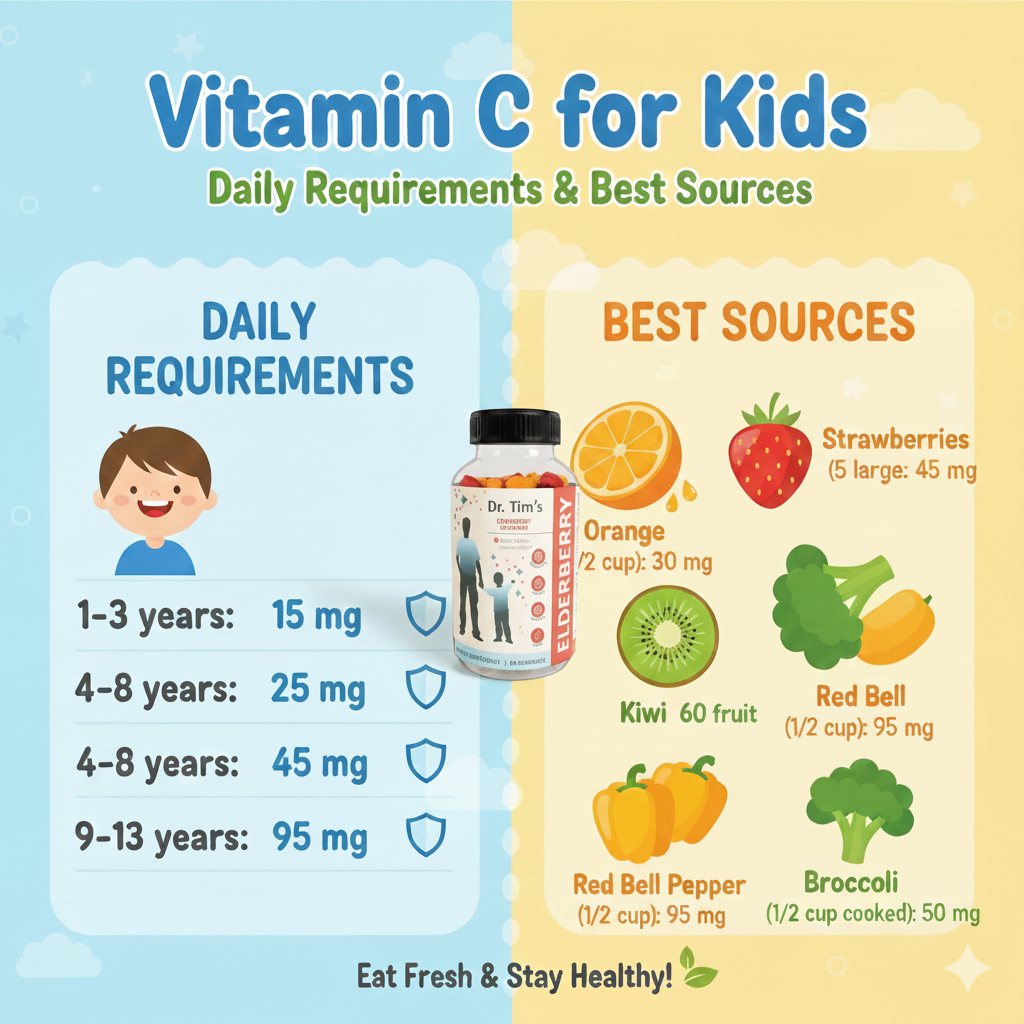
- 1-3 years: 15 mg/day
- 4-8 years: 25 mg/day
- 9-13 years: 45 mg/day
- 14-18 years: 65 mg (girls), 75 mg (boys)
Upper Limits (to avoid side effects):
- 1-3 years: 400 mg
- 4-8 years: 650 mg
- 9-13 years: 1,200 mg
Tip: One medium orange (70 mg) covers a 4-8 year old’s full RDA. Spread intake across meals for best absorption.
Benefits of Vitamin C for Kids
This powerhouse vitamin delivers big wins:
- Immunity Boost: Increases white blood cell function, shortening colds by 14% in kids.
- Wound Healing: Essential for collagen—scratches heal 20-30% faster.
- Iron Absorption: Pairs with plant iron (spinach) to prevent anemia.
- Antioxidant Protection: Shields growing cells from damage during play.
- Bone & Skin Health: Supports cartilage and strong teeth.
- Energy & Focus: Aids neurotransmitter production for school success.
Real Example: 7-year-old Jack’s frequent ear infections eased with daily C-rich foods. His pediatrician noted improved resilience.
Top Food Sources of Vitamin C for Children
Food beats pills, bio-availability is higher. Aim for variety.
Kid-Friendly Sources (per serving):
- Orange (1 medium): 70 mg
- Strawberries (1 cup): 98 mg
- Bell peppers (1/2 cup red): 95 mg
- Broccoli (1/2 cup cooked): 51 mg
- Kiwi (1 fruit): 64 mg
- Cantaloupe (1 cup): 58 mg
- Tomato juice (3/4 cup): 22 mg
- Potatoes (1 baked): 27 mg
Daily Meal Plan Examples:
- Toddler (1-3): Sliced strawberries + yogurt (20 mg breakfast), broccoli bits at dinner (15 mg total).
- School Age (4-8): Orange slices snack (70 mg), pepper strips with hummus (50 mg).
- Tween (9-12): Kiwi smoothie (64 mg), baked sweet potato (25 mg).
Parent Hack: Hide in smoothies or fun shapes. Cooking reduces C by 20-30%—serve raw when possible.
When Do Kids Need Vitamin C Supplements?
Most don’t—but consider for:
- Picky eaters avoiding fruits/veggies
- Frequent illnesses (recurrent colds)
- Limited sun/poor diet (paired with D deficiency)
- Vegan diets (boosts plant iron)
- Post-surgery or injury recovery
Supplement Types:
- Gummies/chewables (fun flavors, 25-50 mg)
- Liquids for toddlers
- Multivitamins covering 100% RDA
Choose USP-verified. Give with iron-rich food. [Link to the Kids Multivitamin Gummies page]
Steps to Supplement Safely:
- Track 3-day food diary.
- Consult pediatrician (blood test if concerned).
- Start low (50% RDA).
- Monitor stools (loose = too much).
Risks and Side Effects of Too Much Vitamin C
Water-soluble, so excess pees out, but high doses cause:
- Mild: Diarrhea, nausea, stomach cramps (>400 mg for toddlers)
- Rare: Kidney stones in prone kids (>2,000 mg adults)
- Interactions: May interfere with chemo or blood tests
Deficiency Signs (Rare):
- Dry skin, easy bruising
- Slow wound healing
- Frequent infections
Never exceed upper limits. AAP advises food-first.
Common Myths vs. Facts About Vitamin C for Kids
Myth 1: Vitamin C prevents all colds.
Fact: Shortens duration, doesn’t prevent. Hygiene matters more.
Myth 2: More is always better.
Fact: Excess causes tummy upset. Stick to RDAs.
Myth 3: Heat destroys all Vitamin C.
Fact: Steaming preserves 80%; microwaving ok briefly.
Myth 4: Kids hate Vitamin C foods.
Fact: Blend into smoothies—taste buds adapt in 10 tries.
Key Takeaways
- Daily Needs: 15 mg (1-3 yrs), 25 mg (4-8), 45 mg (9-13)
- Best Sources: Citrus, berries, peppers—1 orange = full day
- Benefits: Immunity, healing, iron boost
- Safe Upper Limits: 400-1,200 mg by age
- Supplements: For gaps only, pediatrician-guided
- Pro Tip: Pair with iron foods; store away from heat/light
Conclusion
Vitamin C equips your kids to fight bugs, heal fast, and grow strong. Prioritize colorful produce, fill gaps wisely, and watch them thrive. You’re their best advocate, small habits create lifelong health.Parents looking for a doctor-formulated option can explore our Kids Elderberry Gummies at McKnightMD, delivering full RDA Vitamin C in tasty, kid-approved form.
Author Bio
Dr. Sarah Linden, Pediatric Nutritionist. 12 years guiding families to optimal health. Mom of three adventurous eaters. AAP affiliate.
Medical Review Note
Reviewed by Dr. Timothy J. McKnight, MD, Board-Certified Pediatrician. Sources: NIH ODS, AAP Guidelines, Mayo Clinic. Always consult your child’s doctor before supplements.
FAQs
Q1: Can Vitamin C overdose hurt my child?
A: Yes—diarrhea at 400+ mg for toddlers. Stay under limits.
Q2: Best time to give Vitamin C supplements?
A: Morning with breakfast for absorption and energy.
Q3: Do breastfed babies need extra C?
A: No—milk provides plenty. Formula too.
Q4: Does cooking destroy Vitamin C?
A: Some loss—prefer raw or steamed veggies/fruits.
Q5: Can Vitamin C help my child’s allergies?
A: Supports immunity but not direct allergy relief.
Q6: What’s a fun way to get kids to eat more C?
A: Fruit kabobs or frozen berry pops, treats that heal.