
The Complete Guide to Kids’ Vitamins (Expert Pediatric Breakdown)
As parents, we all want our kids to grow strong, stay healthy, and feel their best. But between picky eating, busy schedules, and constant growth spurts, it’s easy to wonder whether your child is getting the nutrients they need.
This complete guide to kids’ vitamins doctor-reviewed and parent-friendly helps you understand exactly what vitamins matter most, when supplements are helpful, and how to confidently support your child’s nutrition.
This article is Pediatrician-Approved, Doctor-Reviewed, and follows the latest guidelines from the NIH, Mayo Clinic, and the American Academy of Pediatrics (AAP).
Why Kids’ Vitamins Matter
Children’s bodies grow rapidly. Their bones lengthen, their immune systems mature, and their brains develop at lightning speed. This requires a steady supply of essential vitamins and minerals.
When kids fall short whether due to picky eating, food allergies, or limited diets supplements can help fill the gap.
What Are Kids’ Vitamins?
Kids’ vitamins are essential micro nutrients organic compounds the body needs in small amounts that support growth, immunity, metabolism, and cellular repair.
They include:
- Vitamin A
- Vitamin B complex
- Vitamin C
- Vitamin D
- Vitamin E
- Vitamin K
- Key minerals: Iron, Zinc, Calcium, Magnesium, Iodine
A well-balanced diet should provide these naturally. But many children don’t eat enough variety to meet daily needs—leading parents to consider supplements.
Signs Your Child May Need Extra Vitamins (Symptoms of Deficiencies)
While a pediatrician should confirm deficiencies, parents often notice:
Common deficiency symptoms:
- Low energy or fatigue
- Poor appetite
- Frequent infections
- Slow wound healing
- Behavioral or concentration issues
- Dry skin or brittle hair
- Delayed growth
- Bone or muscle aches
What Causes Vitamin Gaps in Kids?
Pediatricians often see the same 6 causes behind nutrient deficiencies:
- Picky Eating (most common)
- Low appetite during growth spurts
- Food allergies or intolerances
- Digestive issues affecting absorption
- Highly processed diets low in nutrients
- Limited sunlight exposure (Vitamin D)
If any of these are familiar, your child may benefit from a multivitamin.
The Most Important Vitamins for Kids (Complete Breakdown)
Below is a parent-friendly guide to the vitamins children need most, how much they require, and where to find them.
Vitamin A
Benefits: Vision, immune health, skin development
Daily intake: 300–600 mcg (age-dependent)
Food sources: Eggs, milk, carrots, sweet potatoes, spinach
Supplement need: Helpful for picky eaters or dairy-free kids
Vitamin B Complex
Includes B1, B2, B3, B6, B12, folate, and biotin.
Benefits: Energy, brain function, metabolism
Food sources: Whole grains, eggs, meats, beans
Supplement need: Common for kids with selective eating
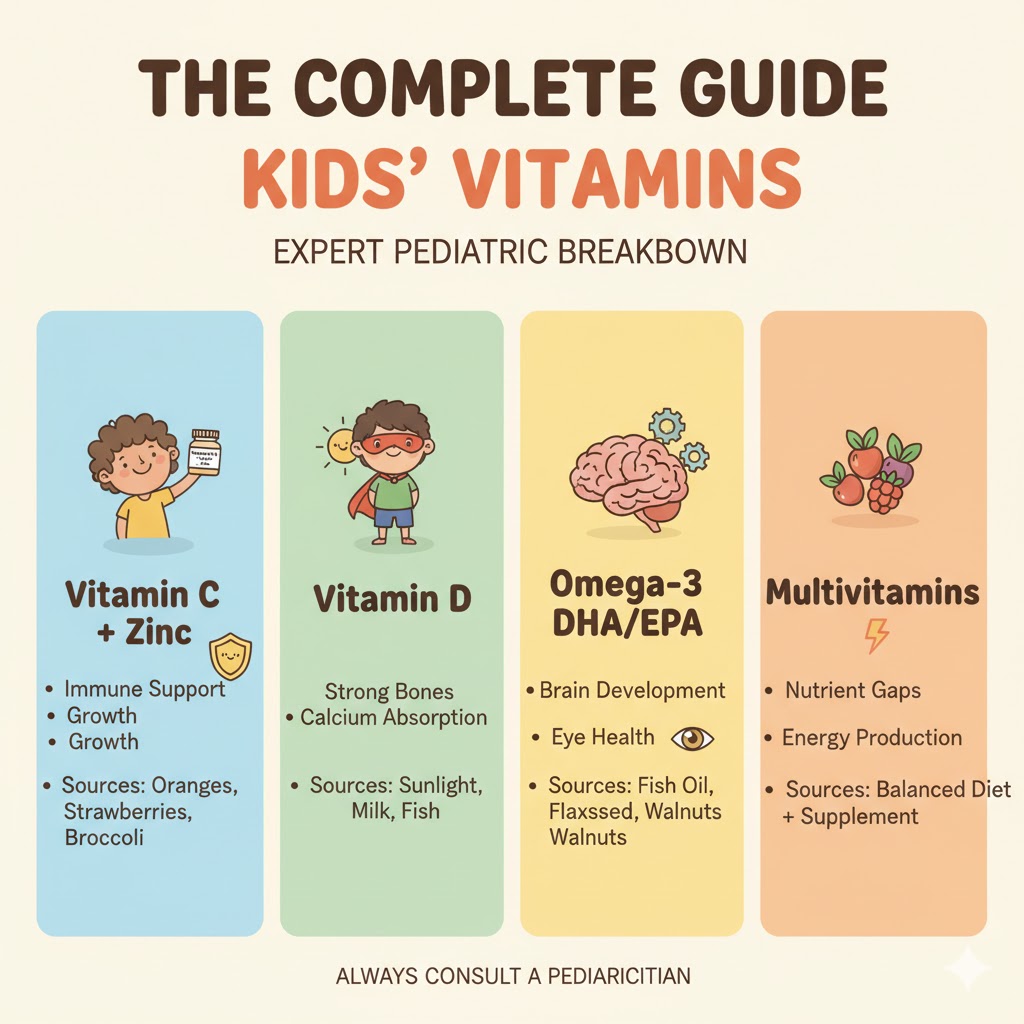
Vitamin C
Benefits: Immunity, antioxidant support, wound healing
Food sources: Citrus, berries, tomatoes, bell peppers
Supplement need: Often recommended during fall/winter
Vitamin D
Benefits: Bone strength, mood, immune system
Daily intake: 600 IU
Food sources: Fortified milk, eggs, sunlight
Supplement need: Most kids in the U.S. need Vitamin D supplements
Vitamin E
Benefits: Antioxidant support, skin health
Food sources: Nuts, seeds, oils
Supplement need: Rare deficiency but safe in multivitamins
Vitamin K
Benefits: Bone health, blood clotting
Food sources: Leafy greens
Supplement need: Often included in multis
Calcium
Benefits: Bones, teeth, muscle function
Daily intake: 1,000 mg
Food sources: Milk, yogurt, cheese, fortified juices
Supplement need: Needed for dairy-free kids
Iron
Benefits: Red blood cell production, energy
Symptoms of deficiency: Fatigue, pale skin, cravings for non-food items
Food sources: Meat, beans, spinach
Supplement need: Only if pediatrician recommends (too much iron can be harmful)
Zinc
Benefits: Immune system, wound healing
Food sources: Meat, pumpkin seeds, beans
Supplement need: Common during cold/flu season
Should Kids Take Multivitamins? (Benefits)
A pediatric multivitamin can help when:
- Your child is a picky eater
- They avoid major food groups
- They are dairy-free or vegan
- They have low appetite
- They experience frequent illnesses
- They struggle with sleep or stress
Benefits of multivitamins for kids:
- Prevent nutrient deficiencies
- Support healthy growth
- Strengthen immunity
- Improve energy levels
- Aid cognitive development
Are There Risks? (Safety Notes)
Kids’ vitamins are safe when used as directed.
However, avoid:
- Megadose vitamins
- Gummies stored at warm temperatures
- Multiple products with overlapping ingredients
Important: Always keep vitamins out of reach. Gummies can look like candy.
Natural Ways to Boost Kids’ Vitamins (Food First Approach)
Before supplements, try adding:
- Smoothies with spinach + berries
- Oatmeal with chia seeds
- Veggie muffins
- Whole grain pastas
- Fortified cereals
- Greek yogurt parfaits
Kids often accept nutrients better when they’re hidden in foods.
Common Myths vs Facts About Kids’ Vitamins
Myth: “If my child eats sometimes, they don’t need vitamins.”
Fact: Many kids still fall short on Vitamin D, iron, or omega-3s.
Myth: “More vitamins = healthier.”
Fact: Too much iron or fat-soluble vitamins can be harmful.
Myth: “All gummies are the same.”
Fact: Quality varies; look for doctor-formulated options.
Myth: “Multivitamins replace food.”
Fact: Supplements fill gaps—they aren’t a substitute for nutrition.
Key Takeaways
- Kids grow quickly and need consistent vitamins.
- Picky eating, food restrictions, and low sunlight create nutrient gaps.
- A pediatric multivitamin can support healthy immunity, energy, and growth.
- Choose doctor-formulated supplements with clean, safe ingredients.
- Focus on food first—but supplements help fill unavoidable gaps.
Conclusion:
Kids’ vitamins aren’t just about filling nutritional gaps—they’re about giving your child the foundation for healthy growth, strong immunity, and lifelong wellness.Whether your child is picky, has dietary restrictions, or simply needs a boost during growth spurts, the right vitamins can make a meaningful difference.
Soft CTA (Non-Salesy)
Parents looking for a doctor-formulated option can explore our Kids Multivitamin Gummies at McKnightMD—designed to support growing bodies with clean, essential nutrients.
Author Bio
Written by: McKnightMD Editorial Team
A team dedicated to making pediatric health simple, trustworthy, and parent-friendly.
Medical Review Note
Reviewed by: Dr. Timothy J. McKnight, MD
Board-Certified Physician | Children’s Wellness Advocate | Medical Director at McKnightMD