
Pediatric Sleep Guide: Natural Ways to Help Kids Sleep Better
Getting kids to sleep well is one of the most common and challenging concerns for parents. From restless nights and bedtime resistance to morning grogginess, sleep struggles touch nearly every family. But what really helps? This comprehensive pediatric sleep guide gives you trustworthy, doctor-reviewed answers, empowering parents with simple, natural solutions that work.
What is Pediatric Sleep and Why Does It Matter?
Pediatric sleep refers to the quality and duration of sleep children need for healthy growth, brain development, emotional regulation, and immune function. The American Academy of Pediatrics (AAP) emphasize that optimal sleep is foundational for every child’s wellbeing.
Recommended Daily Intake
Children require different amounts of sleep depending on age:
- Infants (4-12 months): 12-16 hours (including naps)
- Toddlers (1-2 years): 11-14 hours
- Preschoolers (3-5 years): 10-13 hours
- School-age (6-12 years): 9-12 hours
- Teens (13-18 years): 8-10 hours
(References: AAP, CDC)
What Causes Pediatric Sleep Problems?
Common Causes
- Irregular sleep routines
- Screen time close to bedtime
- Anxiety, stress, or emotional changes
- Dietary factors (caffeine, sugar)
- Illness, allergies, asthma
- Developmental transitions (teething, growth spurts)
- Environmental disruptions (light, noise, temperature)
Symptoms
- Trouble falling asleep
- Frequent night wakings
- Early morning waking
- Daytime sleepiness, mood swings, irritability
- Difficulty concentrating
- Behavior issues
Risks of Poor Sleep
- Impaired learning and memory
- Frequent illnesses (lowered immunity)
- Delayed growth and development
- Obesity risk
Benefits of Healthy Pediatric Sleep
- Enhanced brain function and memory
- Emotional resilience and mood stability
- Stronger immune system
- Improved behavior and attention
- Healthy metabolism and growth
Natural, Pediatrician-Approved Ways to Help Kids Sleep Better
These science-backed methods are doctor-reviewed and safe for families:
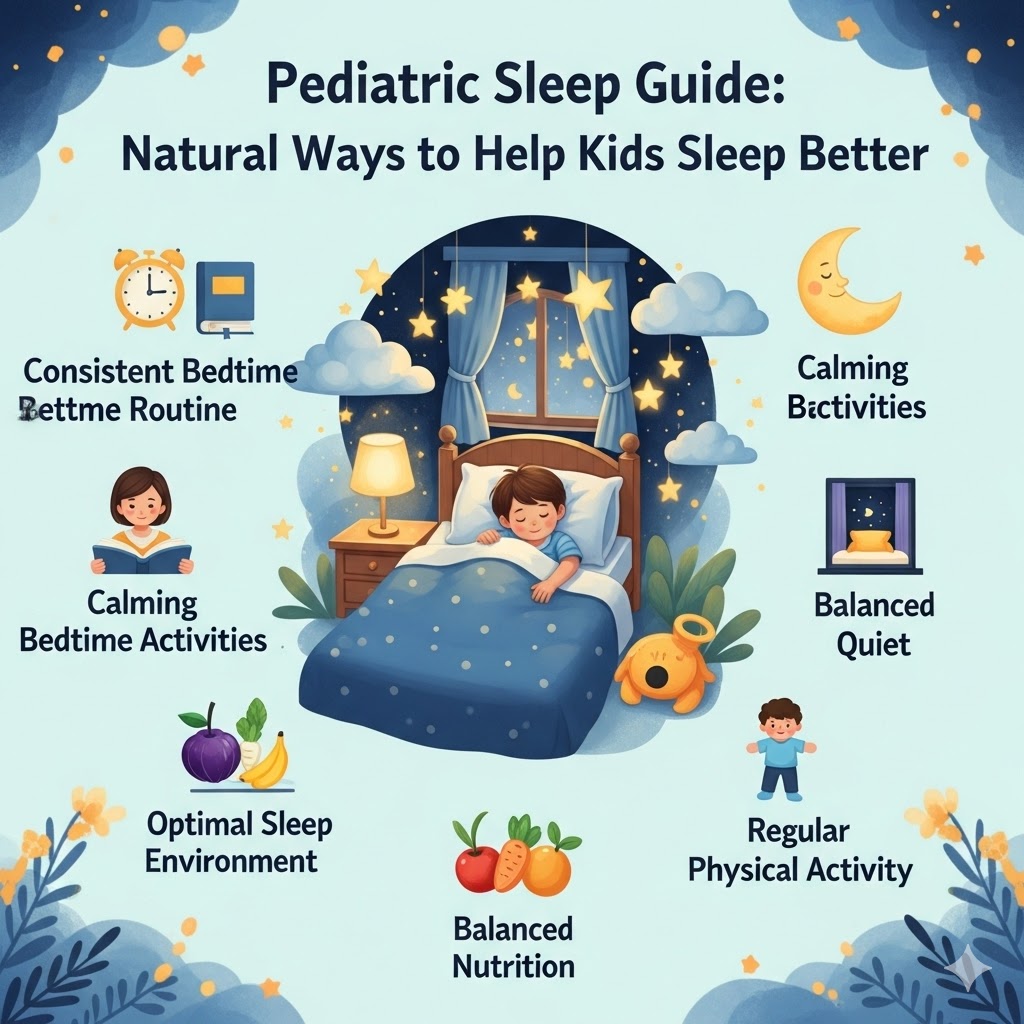
1. Establish Consistent Bedtime Routines
Why it works: Predictable routines help children’s bodies “wind down” and reduce anxiety.
Parent tips:
- Create a calming 20–30 minute routine (bath, pajamas, reading, soft music)
- Stick to set sleep and wake times—even on weekends
- Dim lights 1 hour before bedtime
2. Optimize Sleep Environment
Make bedrooms sleep-friendly:
- Cool, quiet, dark room
- White noise machine if helpful
- Comfortable mattress and bedding
- Remove distracting electronics
3. Limit Screen Time Before Bed
Science says: Blue light delays melatonin—a hormone that helps kids fall asleep.
Parent steps:
- No screens 60 minutes before bed
- Opt for calming activities: drawing, puzzles, stories
4. Support Healthy Nutrition
Sleep-promoting foods:
- Magnesium-rich: bananas, almonds, spinach
- Tryptophan-rich: turkey, milk, eggs
- Balanced dinner—limit high-sugar treats
Link to the Kids Multivitamin Gummies page for filling nutritional gaps safely.
5. Encourage Physical Activity—But Not Too Late
- Active play during the day helps burn off energy
- Avoid intense exercise 2 hours before bedtime
6. Try Relaxation Techniques
- Deep breathing, gentle stretches, guided imagery
- Child-friendly mindfulness apps (with audio stories)
7. Natural Supplements and Remedies
Options reviewed by pediatricians:
- Melatonin: Only short-term use, with doctor guidance
- Magnesium supplements: May help in deficiency cases
- Herbal options (chamomile, valerian): Use only when approved by your pediatrician
Common Myths vs Facts About Kids’ Sleep
- Myth: “Kids will sleep when they’re tired.”
Fact: Overtired children often have trouble settling and may resist sleep. - Myth: “Melatonin supplements are always safe.”
Fact: Melatonin should be used short-term and under pediatrician guidance. - Myth: “Sleep problems are just behavioral.”
Fact: Sleep can be impacted by nutrition, medical issues, and family stressors. - Myth: “Screen time at night isn’t a big deal.”
Fact: Studies show screen time delays sleep onset and affects sleep quality (NIH).
Key Takeaways
- Sleep is vital for child development, health, and behavior.
- Consistent routines, healthy diet, active days, and a calming environment support better sleep.
- Doctor-formulated supplements (like Sleep-Well Gummies) offer gentle, safe options for some kids.
- Parents should watch for ongoing sleep problems and consult a pediatrician when needed.
Practical Steps for Parents: How to Help Kids Sleep Better Tonight
- Set a calming bedtime routine (bath, pajamas, screen-free quiet time)
- Ensure your child gets balanced nutrition—add a multivitamin if recommended.
- Limit screens one hour before bed.
- Create a cool, quiet, dark bedroom.
- Encourage active play—but avoid high-energy activities before bed.
- Try gentle relaxation techniques.
- If needed, ask your pediatrician about sleep-friendly supplements.
Soft Call-to-Action
Parents looking for a doctor-formulated option can explore our Kids Multivitamin Gummies at McKnightMD, Sleep-Well Gummies, Probiotic Gummies, and Prenatal Gummies—all developed with trusted medical insight for your child’s best sleep and overall wellness.
Author Bio
Written by: McKnightMD Editorial Team
Pediatric Health Writer & Parent Advocate
Specializing in science-based wellness for growing families.
Medical Review:
Reviewed by Dr. Timothy J. McKnight, MD
Board-Certified Family & Pediatric Physician
Founder, McKnightMD. Powered by decades of clinical practice and pediatric wellness research.